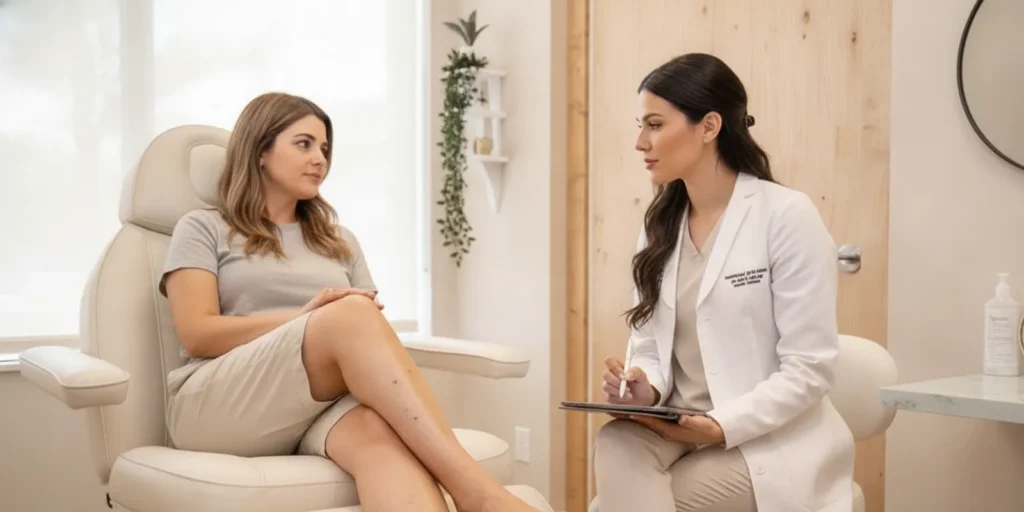
Spider Vein Treatment Consultation: What to Bring
If you are considering a spider vein treatment consultation in Orlando, a little preparation can make the conversation more useful. Bring a clear account of your goals, health history, and questions so your provider can discuss whether evaluation or treatment may be appropriate for you.
Request a no-cost consultation
What should you bring to a spider vein consultation?
You do not need a perfect medical file. A concise, accurate overview is enough to start. Consider preparing these details before your visit:
- Your main concern: Note where the veins appear, how long you have noticed them, and what you hope to understand or change.
- Relevant symptoms: Describe any aching, heaviness, itching, swelling, tenderness, or skin changes, including when they occur. These details may help determine whether a medical evaluation is needed.
- Health history: Write down relevant diagnoses, prior vein procedures, past blood clots, pregnancies, surgeries, and any family history of vein problems.
- Medication and allergy list: Include prescription medicines, over-the-counter products, supplements, and known allergies.
- Prior evaluations: Bring reports or information about any previous vein assessment or imaging, if available.
- Practical constraints: Mention upcoming travel, work demands, activity plans, or other scheduling factors that could affect treatment planning.
If you have photos that show how a concern changes over time, you can ask whether they would be useful. Do not feel you must take or share photos. The Palm Medspa + Wellness follows privacy practices described in its privacy notice.
How can you make a symptom timeline?
Notes made over several days can help you describe a pattern more clearly than relying on memory during an appointment. Use a simple log with the date, what you noticed, when it began, and what was happening at the time. For example, record whether discomfort appeared after a long shift on your feet, after sitting for an extended period, or without an obvious trigger. Do not try to interpret the pattern as a diagnosis; the point is to report observations accurately.
Include changes you can see as well as sensations. If swelling is present, note when you first noticed it and whether it comes and goes. If skin appearance has changed, describe the location and timing. Mention whether one leg or both legs are involved. If there are no symptoms and your concern is mainly appearance, say so plainly. This distinction helps the provider understand what you want addressed and whether the next step should be aesthetic discussion or medical evaluation.
Keep the log factual and brief. You do not need to measure or photograph your legs unless a clinician asks you to. If a symptom is sudden, severe, or concerning, do not wait for a planned cosmetic appointment to seek appropriate medical care.
What should you ask during the appointment?
A consultation is a chance to understand the concern and identify a reasonable next step—not a commitment to proceed. You can bring this checklist and choose the questions most relevant to you:
- What type of veins or symptoms do you see, and what could be causing them?
- Is an aesthetic treatment discussion appropriate, or should I first see a medical specialist?
- What options might be considered for my situation, and what are their limits?
- What should I expect during a procedure, if I am a candidate?
- What are the possible risks, side effects, and recovery considerations?
- Would I need one visit or a series, and how would you decide?
- What activities or medications might need to be discussed before treatment?
- How should I contact the practice if I have a concern afterward?
Ask for plain-language explanations. If an answer is unclear, ask the provider to explain it another way. The American Society for Aesthetic Plastic Surgery preparation guide advises patients to get pretreatment instructions from their surgeon and ask questions before a spider vein procedure. That makes the consultation a good time to confirm what instructions apply to your own circumstances, rather than relying on a general checklist.
How can you describe symptoms without guessing at a diagnosis?
Specific observations are more useful than medical labels you may have found online. Instead of saying you think you have a particular vein condition, describe what you see and feel, how long it has been happening, and whether it is changing. You might note whether discomfort follows prolonged standing, whether it is present in one or both legs, and whether swelling or skin changes occur. If you are unsure about a term, point to the area or explain it in everyday language.
Spider veins and varicose veins are not interchangeable terms. The University of Utah Health explains that symptoms can help people seek care from the appropriate specialist. If you are unsure whether your concern is cosmetic or medical, ask where you should be evaluated rather than assuming a med spa consultation is the right endpoint. Read its overview of varicose veins versus spider veins for general context, then let a qualified clinician assess your individual concern.
Also explain what outcome matters to you. Some people want to understand whether visible veins merit assessment; others want to learn about appearance-focused options, possible risks, or recovery. Be specific about priorities, but leave room for the provider to explain limits and alternatives. A realistic conversation includes what a service may not address as well as what it may be intended to improve.
What may happen at a treatment consultation?
The provider will listen to your concerns and ask about your health and treatment goals. They may examine the area and discuss whether your symptoms call for further medical assessment. The right next step depends on your individual history and findings, so an online article cannot determine your candidacy or diagnose a vein condition.
Expect a conversation rather than a guaranteed treatment recommendation. A useful visit should leave you understanding the concern being discussed, what options may be appropriate to explore, and whether another kind of assessment should come first. If the available information is not enough to make a recommendation, ask what additional evaluation is needed and who should provide it.
At The Palm, the consultation-first approach is designed to listen, educate, and plan with the patient. Learn more about the practice and its approach to personalized care, or review its med spa FAQs before your appointment. You can also explore available treatment services to understand the range of care discussed on the site; a service listing does not establish that a specific option is suitable for you.
How do treatment and evaluation options differ?
Options depend on what the provider identifies and whether symptoms suggest a medical issue. The table below is a discussion aid, not a diagnosis or a promise that a particular option will be recommended.
| Path to discuss | When it may be relevant | What to clarify |
|---|---|---|
| Cosmetic consultation | When visible veins are the main concern and there are no concerning symptoms | Whether the concern is appropriate for aesthetic care; possible treatment, risks, expected course, and cost |
| Medical evaluation | When symptoms, skin changes, or uncertainty suggest a health assessment is needed | Which clinician or specialist to see and whether further evaluation is recommended |
| Defer treatment and monitor | When you need time to consider options or gather health information | What changes should prompt follow-up and when to check back |
Ask what a proposed price includes and whether a plan may involve more than one visit. Recommendations and costs depend on assessment, and you should ask for details before making a decision. Clarify what is included, how many visits are anticipated if that can be estimated, whether follow-up is part of the plan, and what could change the recommendation. Do not assume that an aesthetic service is covered by insurance or that a broad starting price applies to your specific situation.
If the recommendation is medical evaluation, ask for a clear explanation of why and what kind of clinician to contact. If treatment is not advised, ask whether there are signs or changes that should lead you to follow up. You can review The Palm’s treatment care guides for general preparation and aftercare information, while following individualized instructions from your provider. For logistical questions, use the practice’s contact page.
How can you prepare for a useful conversation?
Before the appointment, rank your questions in order of importance. Start with health and safety concerns, then discuss possible options, recovery, timing, and cost. Bring your medication list and be ready to describe your goals honestly. You can also ask whether you should avoid or continue any routine before an evaluation; follow individualized instructions rather than changing medication on your own.
Keep documents organized in one place. A short note in your phone or a printed page can include your symptom timeline, previous assessments, medication and allergy details, and your top questions. If you are bringing records, make a note of what they relate to and when the evaluation occurred. If there are details you are uncertain about, mark them as uncertain instead of trying to fill in gaps from memory.
Think through practical matters, too. Consider whether you need to arrange time away from work, how travel or exercise plans might affect scheduling, and what you would need to know before agreeing to any treatment. These are questions to raise, not assumptions that a particular recovery period or restriction will apply. Ask the provider to explain recommendations for your case and to distinguish general guidance from instructions specific to you.
It may help to bring a support person if you want another set of ears, especially if you expect to discuss several options. You can also ask permission to take notes. Before leaving, repeat back the plan in your own words: what was discussed, what remains undecided, and what your next step is. This gives the provider a chance to correct a misunderstanding.
What should you consider after the visit?
Take time to review what you learned. Write down the recommended next step, any precautions, and whom to contact if new questions arise. If the recommendation is to seek medical evaluation, treat that as useful direction rather than proceeding with an aesthetic procedure first. If several paths were discussed, compare them against your priorities, comfort level, schedule, and budget.
You are allowed to ask follow-up questions or request clarification before deciding. Check that you understand the expected course, potential risks, alternatives, and what would happen if you wait. Be cautious about making a decision based on an assumption that every visible vein has the same cause or that one approach fits everyone. The purpose of preparation is to help you participate in a clear, informed conversation.
Ask about a no-cost consultation
Frequently asked questions
Do I need to bring medical records?
Bring relevant reports if you have them, especially information about prior vein evaluations or procedures. If records are not available, a clear summary of your history, medications, and symptoms is still helpful.
Should I stop taking medication before the consultation?
Do not stop or change prescribed medication based on general advice. Bring a complete list and ask the provider whether any treatment-specific instructions apply to you.
Will a consultation mean I have to book treatment?
No. A consultation is an opportunity to discuss your concern, ask questions, and understand possible next steps. You can take time to consider the information before making a decision.
What if I have pain or swelling?
Tell the provider clearly and ask whether you should be evaluated by a medical clinician or specialist. Sudden or severe symptoms warrant prompt medical attention rather than waiting for a cosmetic consultation.
What if I do not know whether my concern is cosmetic?
Describe what you see and feel without trying to classify it. Ask whether the concern is appropriate for an aesthetic discussion or whether another clinician should assess it first. The consultation should help clarify a sensible next step, not pressure you to choose treatment.
Coming prepared helps you have a more focused conversation, but your individual assessment should guide any decision. If you are in Orlando and want to discuss your concerns, contact The Palm Medspa + Wellness to ask about a consultation.