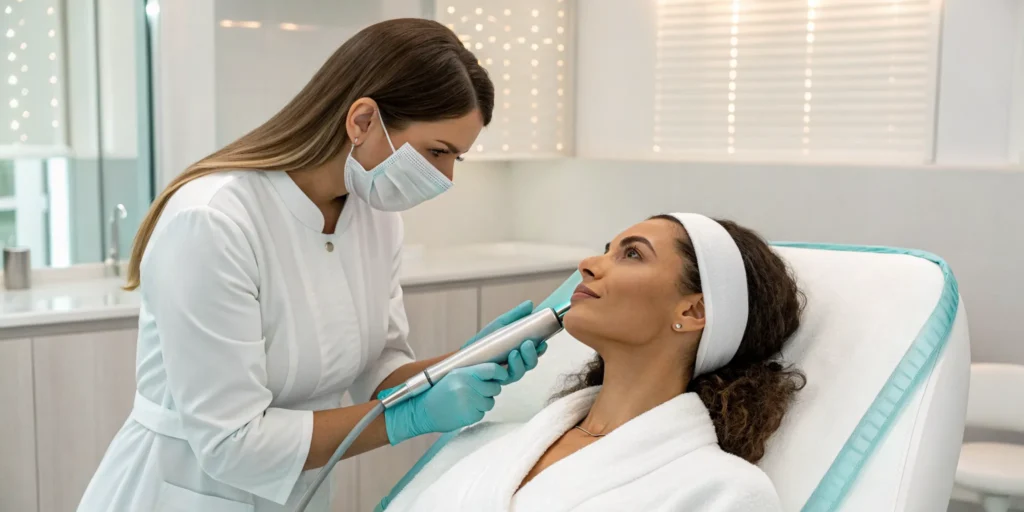
The idea of using a laser on your face might sound intense, but the science behind it is surprisingly straightforward. It’s not about burning away scars, but about communicating with your skin in a language it understands: light and energy. Using a laser for removing acne scars is a precise process that triggers your body’s own powerful healing mechanisms. It signals your skin to clear away old, disorganized scar tissue and ramp up the production of new, smooth collagen. We’ll explain the different types of lasers and how each one is expertly chosen to address your specific concerns, from texture to redness.
Key Takeaways
- Lasers rebuild skin from the inside out: The treatment uses targeted light energy to break down old scar tissue and signal your body to create new, smooth collagen, effectively filling in scars and improving texture.
- A custom plan is essential for results: No single laser works for every scar, so the best approach matches the right technology to your specific needs, which is determined during a professional consultation.
- Your aftercare is as important as the treatment: The journey to smoother skin requires a series of sessions and your commitment to the healing process; diligent sun protection is non-negotiable for achieving the best outcome.
How Does Laser Treatment for Acne Scars Work?
Laser treatments for acne scars might sound intense, but the science behind them is pretty straightforward. At its core, the process uses focused light energy to kickstart your skin’s own natural healing and remodeling abilities. Instead of just covering up scars, these treatments work from within to rebuild smoother, healthier skin where the scar tissue once was. It’s a two-step process: first, breaking down the old, damaged tissue, and second, encouraging your body to replace it with something better. This approach allows for a significant reduction in the appearance of scars, leading to a complexion you can feel confident about.
Breaking down scar tissue
Think of a scar as a patch of disorganized, tough collagen fibers that your body created in a hurry to heal a wound. Laser treatments work by sending precise beams of light deep into the skin to gently and safely break apart this scar tissue. This targeted energy dismantles the rigid structure of the scar without harming the surrounding healthy skin. It’s a bit like a controlled demolition, clearing away the old foundation to make way for a new one. This first step is essential for signaling to your body that it’s time to begin the renewal process and build fresh, new skin in that area.
Stimulating new collagen for smoother skin
Once the old scar tissue is broken down, the second phase begins. The heat from the laser acts as a powerful signal, telling your skin to ramp up its production of new collagen and elastin. These are the essential proteins that give your skin its smooth, firm, and youthful structure. Unlike the disorganized collagen in a scar, this new collagen grows in a neat, organized framework. As it builds up over the weeks following your treatment, it fills in pitted scars and smooths out uneven texture from the inside out. This is how advanced skin treatments help your skin effectively heal itself, resulting in a noticeably smoother surface.
Setting realistic expectations: what lasers can (and can’t) do
It’s important to have a clear picture of what laser treatments can achieve. While they can create dramatic improvements, no treatment can completely erase a scar. The goal is to make scars significantly less noticeable, so your skin appears much smoother and more even-toned. Think of it as making the scars very difficult to see rather than making them vanish entirely. Your final results will depend on factors like your scar type, your skin tone, and the specific laser used. Our team at The Palm is dedicated to creating a personalized plan that gives you the best possible outcome and helps you understand what to expect every step of the way.
Finding the Right Laser for Your Acne Scars
Choosing the right laser treatment can feel overwhelming, but it really comes down to matching the technology to your specific type of scarring. Not all lasers are created equal; some are designed for deep, textural scars, while others excel at correcting discoloration. The key is to understand what each one does best. Think of it like assembling a toolkit, where each tool has a specific job. For example, a laser that’s fantastic for smoothing out a raised scar might not be the best choice for the red marks left behind by a pimple. This is why a one-size-fits-all approach just doesn’t work for acne scars.
The world of lasers includes ablative, non-ablative, and fractional options, each with its own strengths and ideal use cases. An ablative laser might be perfect for someone with deep, pitted scarring, while a non-ablative laser could be the answer for someone looking to refine mild texture with no downtime. Understanding these differences is the first step toward making an informed decision. A consultation with a skilled provider is the most important part of this process. They can properly assess your skin and your scars, listen to your goals, and recommend the perfect approach to help you achieve the smooth, clear skin you’re looking for.
Ablative lasers
Ablative lasers are the heavy hitters in the world of skin resurfacing. These lasers, like CO2 and Erbium types, work by carefully removing the thin, outer layer of your skin. This process gets rid of damaged surface cells and reveals the smoother, healthier skin underneath. Because they go deeper, ablative lasers are incredibly effective for more severe textural scars, such as deep boxcar or icepick scars. The trade-off for these powerful results is a longer recovery period. You can generally expect about one to three weeks of social downtime as your skin heals and regenerates, but the dramatic improvement in skin texture is often well worth the wait.
Non-ablative lasers
If you’re looking for improvement with minimal downtime, non-ablative lasers might be your perfect match. Unlike their ablative counterparts, these lasers work their magic underneath the skin’s surface without removing the top layer. They use heat to gently warm the underlying tissue, which kicks your body’s natural healing process into gear and stimulates new collagen production. This makes them a great option for treating milder textural scars and improving overall skin tone. Since the surface of your skin remains intact, the recovery is much quicker, allowing you to get back to your routine almost immediately with little more than some temporary redness.
Fractional lasers
Fractional lasers offer a smart compromise between the intensity of ablative lasers and the gentleness of non-ablative ones. Instead of treating the entire skin surface at once, a fractional laser delivers microscopic columns of energy deep into the skin, leaving the surrounding tissue untouched. This approach stimulates collagen growth and helps smooth out texture and even out pigmentation from moderate scars. Because it treats the skin in a pixelated pattern, the healing process is much faster than with a fully ablative laser. This gives you significant, noticeable results with much less downtime, making it a popular and effective choice for many people.
BBL HEROic Laser for post-inflammatory redness
Sometimes, the most frustrating reminder of a breakout isn’t a scar’s texture, but the stubborn red or pink spots left behind. This is called post-inflammatory erythema (PIE), and it can linger for months. This is where our BBL HEROic Laser truly shines. This advanced light therapy specifically targets the pigment in these red spots, breaking it up so your body can clear it away naturally. It’s a gentle, effective way to even out your complexion and reduce the visible redness associated with acne. The treatment helps your skin look clear and calm, finally fading those last traces of past breakouts without disrupting your schedule.
Pairing lasers with other treatments for better results
For truly transformative results, one treatment alone might not be enough. A comprehensive plan often involves combining different technologies to address every aspect of your scarring. For example, we might use a laser to smooth out texture and then recommend Sylfirm X RF Microneedling to further stimulate collagen and tighten the skin. For deep, indented scars, pairing a laser treatment with facial fillers can provide the lift and volume needed for a truly smooth surface. This multi-faceted approach allows us to customize your treatment, ensuring every concern is addressed and helping you achieve the best possible outcome.
Is Laser Acne Scar Removal Right for You?
Deciding to treat acne scars is a big step, and it’s smart to do your research first. While a professional consultation is the only way to know for sure, understanding the key factors can help you feel more prepared for that conversation. Your skin type, the kind of scars you have, and your overall skin health all play a part in determining if laser treatment is your best path to smoother skin. Let’s walk through what makes someone a great candidate for laser acne scar removal.
How skin type and tone play a role
One of the most common questions I hear is, “Will lasers work for my skin tone?” It’s a valid concern, as older laser technologies carried risks for people with more melanin in their skin. The good news is that technology has come a long way. Modern devices are designed to be safe and effective for a wide range of skin tones, thanks to significant advancements in laser technology that make treatments much more inclusive. At The Palm, we use state-of-the-art lasers like the BBL HEROic Laser that allow us to customize the treatment precisely for your skin’s unique needs, ensuring both safety and great results.
The best types of scars for laser treatment
Not all acne scars are created equal. Lasers are fantastic for treating atrophic scars, which are the little depressions left behind after a breakout. This includes “boxcar” scars (broad, with sharp edges) and “rolling” scars (wide with a wavy appearance). Lasers work by creating controlled micro-injuries in the skin, which prompts your body to produce new collagen and essentially fill in these depressions from the inside out. This process is especially effective for improving overall skin texture. Different types of lasers are better suited for different scars, which is why a personalized assessment is so important to create the right plan for you.
Why active acne and other conditions matter
Before we can effectively treat the scars, we need to make sure we’re not creating new ones. If you’re still experiencing active breakouts, our first priority will be to get your acne under control. Treating scars while your skin is still inflamed and breaking out is like trying to paint a wall while it’s still being built, it just doesn’t make sense. We need a calm, clear canvas to work with. Similarly, if you have other skin conditions like eczema or rosacea, we’ll need to address those first to ensure your skin is healthy enough to heal properly after a laser session.
Knowing when another treatment is a better fit
While lasers are incredibly effective, they aren’t always the one-and-done solution for every scar. Sometimes, the best approach is a combination of treatments. For instance, a very deep, pitted scar might benefit from a small amount of dermal filler to lift the indentation before we use a laser to refine the surface texture. In other cases, a treatment like Sylfirm X RF Microneedling might be a better starting point or a great complementary procedure. The future of scar revision lies in these integrated treatment plans, and our goal is always to create a strategy that gives you the most significant, lasting improvement.
Your Laser Treatment Journey: Before, During, and After
Knowing what to expect can make your laser treatment experience feel much more comfortable and exciting. From the initial prep work to the moment you see your final results, every step is part of the process of revealing smoother, clearer skin. Think of this as your roadmap to a successful treatment, guiding you through what happens before you arrive, during your session, and in the days and weeks that follow. Following these steps helps ensure you get the beautiful outcome you’re looking for.
How to prepare for your laser session
Proper preparation is key to getting the most out of your laser treatment. It all starts with a thorough consultation with a skilled provider. During this chat, we’ll discuss your goals and medical history to confirm that a laser treatment is the right fit for you. We’ll also create a personalized pre-treatment plan. Generally, this involves pausing the use of certain skincare products, like those containing retinol or acids, for a week or two beforehand. You may also need to avoid specific medications, such as aspirin or other blood thinners, that can increase sensitivity. We’ll give you a complete list of instructions tailored just for you, so you’ll feel fully prepared for your appointment.
A look inside the treatment room
When you come in for your session, our goal is to make you feel completely at ease. We’ll start by cleansing your skin and applying a topical numbing cream to ensure your comfort. During the treatment, your provider will use a specialized laser handpiece to deliver precise pulses of light energy to the targeted areas. You might feel a warm, snapping sensation as the laser works to gently break down scar tissue and stimulate your skin’s natural healing response. Depending on your specific needs, we might use our BBL HEROic Laser for redness or other advanced laser technologies to address texture. The entire process is relatively quick, often taking less than an hour.
Your post-treatment timeline: downtime and healing
After your session, your skin will likely look and feel like it has a mild sunburn. This redness and sensitivity are completely normal and usually fade within a few hours to a few days. While there’s typically no major downtime required, we do recommend taking it easy and avoiding strenuous exercise or excessive heat for the first 24 hours. Your skin will begin its renewal process, and you’ll start to notice improvements in texture and tone within 7 to 10 days. The best results, however, will appear over the following weeks and months as new collagen builds, revealing smoother, more refreshed skin.
Essential skincare after your laser treatment
Post-treatment care is just as important as the treatment itself for achieving and maintaining your results. The number one rule is to protect your skin from the sun. Your skin will be extra sensitive, so applying a broad-spectrum SPF 30 or higher every single day is non-negotiable. You’ll also want to be gentle with your skin, using a mild cleanser and a hydrating moisturizer to support the healing process. We will provide you with specific aftercare instructions, including which products to use and what to avoid. Following this guidance carefully helps protect your investment and ensures your skin heals beautifully.
Understanding the Risks and Side Effects
Any treatment powerful enough to transform your skin will have potential side effects. Thinking about them isn’t meant to be scary; it’s about being prepared so you can have the smoothest experience possible. The good news is that when you work with a skilled professional, major risks are rare. During your consultation, we’ll talk through your specific skin concerns and medical history to make sure you’re a great candidate for the treatment. This conversation is the perfect time to ask any questions you have about the process.
Knowing what to expect helps you feel confident and in control of your treatment journey. Most side effects are a normal part of the healing process and a sign that your skin is busy building fresh, new collagen. We’ll give you detailed aftercare instructions to help you manage them and ensure you get the beautiful results you’re looking for. It’s important to remember that everyone’s skin heals differently, and your experience will be unique to you. We’re here to support you every step of the way, from your first question to your final follow-up appointment. Our goal is to make you feel comfortable and informed, so you can focus on the exciting transformation ahead.
Common (and temporary) side effects to expect
After your laser session, it’s completely normal for your skin to look and feel like it has a mild sunburn. You can expect some redness, swelling, and a bit of discomfort in the treated area. Some people also experience temporary itching or even light bruising. These effects are your body’s natural healing response kicking into gear. They typically fade within a few hours to a few days, depending on the intensity of your treatment. We’ll walk you through exactly how to care for your skin to keep you comfortable as it heals.
A special note on darker skin tones
It’s true that in the past, some lasers posed a risk for deeper skin tones. This was due to a higher chance of post-inflammatory hyperpigmentation (PIH), which is the temporary darkening of the skin after an injury or inflammation. However, laser technology has come a long way. Modern devices, like our Sylfirm X RF Microneedling system, are designed to be safe and effective for all skin types. The key is choosing a provider who has extensive experience treating skin of color and who can select the perfect laser settings for you.
How to protect your skin and your results
Your results depend just as much on what you do after you leave our spa. Your number one job is to protect your skin from the sun. Freshly treated skin is extra sensitive to UV rays, so you’ll need to be diligent with a broad-spectrum sunscreen and avoid direct sun exposure for several weeks. This is non-negotiable for preventing pigmentation issues and protecting your investment. We also recommend waiting until any acne scars are fully healed before starting treatment. Following your personalized aftercare plan is the best way to support your skin’s healing and achieve smooth, lasting results.
The Investment: What Does Laser Treatment for Acne Scars Cost?
Let’s talk about one of the biggest questions on your mind: the price tag. Thinking about the cost of laser treatments for acne scars is a practical and important step. It’s helpful to see it not just as a cost, but as an investment in your skin and, more importantly, your confidence. The final price is different for everyone because every treatment plan is tailored to your specific needs. During a consultation, we can give you a clear and detailed breakdown of what to expect.
Cost breakdown by laser type
The type of laser used in your treatment is a major factor in the overall cost. Generally, you’ll find that ablative laser treatments have a higher price point per session, often averaging around $2,000. These lasers work by removing the outer layers of skin and require more downtime. Non-ablative lasers, which work beneath the skin’s surface without removing the top layer, are typically less expensive, averaging around $1,100 per session. Remember, these are just national averages. The best way to get an accurate price for your specific goals is to schedule a consultation where we can assess your skin and discuss which of our laser treatments is right for you.
Factors that influence the final price
Your final cost isn’t just about the laser itself. Several other factors come into play, which is why a personalized quote is so important. The size of the treatment area and the number of scars being addressed will influence the price. A few small scars on your cheeks will naturally cost less to treat than more extensive scarring across your back. Your provider’s experience and the technology they use also play a role. Working with a highly trained team ensures you get the best, safest results. Finally, the total number of sessions required will be the biggest determinant of your total investment.
How many sessions will you need?
Achieving smoother skin is a process, not a single event. It’s very rare for acne scars to be fully addressed in just one session. Most laser treatments, especially fractional lasers, work by treating a small portion of the skin at a time. This approach allows your skin to heal faster while stimulating collagen production over several weeks. Each session builds on the last, gradually creating smoother, healthier skin. Treatments like Sylfirm X RF Microneedling follow a similar principle, requiring a series of appointments to achieve the best outcome. We’ll map out a recommended treatment schedule for you during your consultation.
Is it worth it? Weighing the cost and benefits
This is the most personal question of all. Laser treatments can dramatically reduce the appearance of acne scars, but it’s important to have realistic expectations. The goal is to make the scars much less noticeable, not to erase them completely. The laser works by breaking down old scar tissue and encouraging your body to build fresh, new skin in its place. For many people, the increase in confidence from seeing smoother skin in the mirror is well worth the financial investment. The best way to decide is to weigh the cost against the personal value of feeling more comfortable and confident in your own skin.
Frequently Asked Questions
How long will it take to see results from my laser treatment? You’ll likely notice some initial improvements in your skin’s texture and tone within a week or two as the surface heals. However, the most significant changes happen under the surface and take a bit more time. The laser stimulates new collagen growth, and this process continues for weeks and even months after your final session. Most people see their best, most noticeable results about three to six months after completing their treatment series.
Is laser treatment for acne scars painful? This is one of the most common questions I get, and it’s a fair one. We take every step to make sure you’re comfortable. Before we begin, we apply a strong topical numbing cream to the treatment area. During the session, most people describe the feeling as a quick, warm snapping sensation against the skin. It can be a little uncomfortable, but it’s very manageable and over quickly.
Can I get laser treatments if I have a darker skin tone? Yes, absolutely. While older laser technologies carried risks for skin with more melanin, modern advancements have made treatments much safer and more effective for a wide range of skin tones. The key is using the right device and having a provider who is experienced in treating skin of color. We use state-of-the-art lasers and customize the settings precisely for your skin to ensure a safe procedure and beautiful results.
Why do I need multiple sessions? Won’t one be enough? Think of it like building a strong foundation. One session can definitely make a difference, but lasting, significant improvement comes from a series of treatments. Most modern lasers work by treating a fraction of the skin at a time, which allows for safer healing and more effective collagen stimulation. Each session builds upon the last, gradually smoothing out scars and improving texture. A series of treatments ensures we get the most comprehensive and durable result possible.
What’s the most important thing I can do after my treatment to get the best results? Without a doubt, the most critical part of your aftercare is protecting your skin from the sun. Your skin will be very sensitive after a laser treatment, and sun exposure can lead to pigmentation issues and damage the new, healthy skin cells you’re building. Being diligent about applying a broad-spectrum sunscreen every single day (and reapplying it) is the best way to protect your investment and ensure your skin heals beautifully.