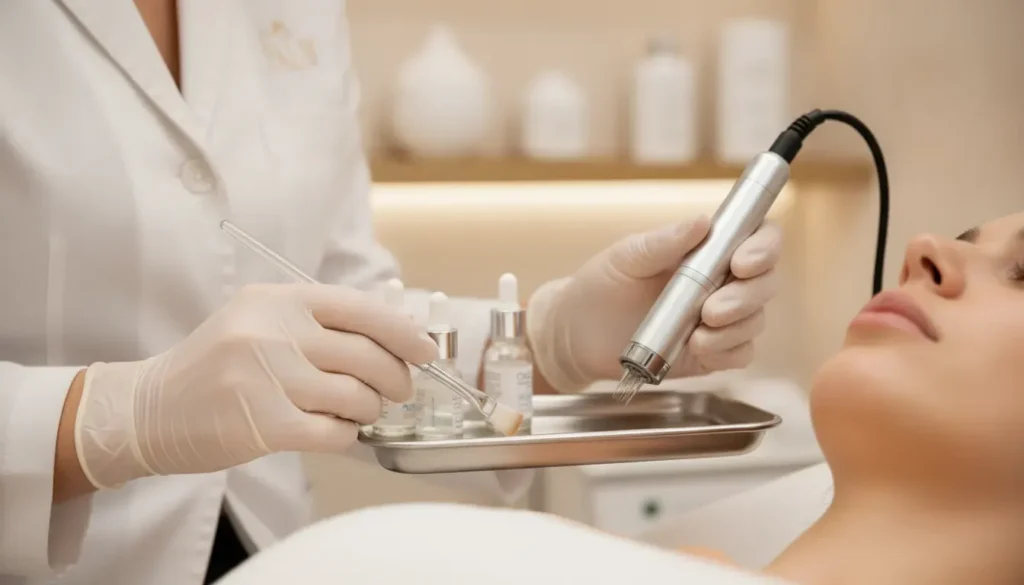
Choosing between a chemical peel and microneedling depends on what you want to improve, how deeply the concern sits in the skin, and how much recovery time fits your schedule. In the chemical peel vs microneedling decision, a peel primarily refreshes the skin’s surface, while microneedling creates controlled micro-channels that support collagen remodeling below the surface. Neither is automatically better for every patient.
If you are comparing treatments in Orlando, start with the concern rather than the trend. Your provider can evaluate texture, pigmentation, acne scarring, sensitivity, skin tone, medical history, and your preferred downtime. The Palm Medspa + Wellness also explains how different modalities fit together in its laser and skin treatment guide for Orlando patients.
Quick answer: Chemical peels may be a better fit for surface dullness, uneven tone, some acne-related concerns, and fine lines. Microneedling may be a better fit for selected acne scars, uneven texture, and gradual collagen-focused renewal. A consultation is the safest way to choose, and a personalized plan may use one treatment or a carefully spaced sequence.
Book a no-cost consultation with The Palm Medspa + Wellness.
What Is a Chemical Peel?
A chemical peel uses a clinician-selected solution to exfoliate or resurface damaged outer layers of skin. The strength, ingredients, application time, and aftercare plan all affect the experience. A superficial peel may create a light, temporary shedding response, while a deeper peel requires more careful planning and recovery. The goal is controlled skin renewal, not an aggressive treatment chosen simply because it sounds stronger.
At The Palm, medical-grade peels are customized to concerns such as uneven tone, pigmentation, acne, dull texture, and some fine lines. The treatment is performed on areas such as the face, neck, or chest when appropriate. You can learn more about the service on the chemical peels treatment page.
What can a chemical peel help address?
- Surface dullness and rough-feeling texture
- Uneven tone and selected pigmentation concerns
- Some acne and post-acne marks
- Fine lines that are influenced by surface texture
- A complexion that looks less even or radiant than you would like
Peels can cause stinging, redness, tenderness, dryness, or visible peeling depending on the formula and depth. Protecting the skin from sun exposure and following the recommended aftercare are important parts of the treatment. The American Academy of Dermatology’s acne-scar guidance notes that treatment should be selected based on the type of scar, the patient’s goals, and the amount of downtime they can manage.
What Is Microneedling?
Microneedling, also called collagen induction therapy, uses a professional device with very fine needles to create controlled micro-injuries in the skin. The healing response can support new collagen and elastin formation over time. Rather than removing surface layers with a solution, microneedling is designed to encourage gradual structural renewal.
The Palm’s microneedling service is positioned for concerns including acne scars, uneven texture, and fine lines. Treatment depth and settings should be selected by a trained provider, not copied from an online routine or an at-home device. The existing microneedling skin-renewal guide covers the treatment itself in more detail; this article focuses on how it compares with a peel.
What should you expect after microneedling?
Immediately after treatment, skin may look flushed and feel warm, tight, or sensitive. Mild redness and temporary roughness can occur as the skin recovers. Results develop gradually, and a provider may recommend a series rather than promising a complete change after one appointment. Gentle skincare, sun protection, and the specific aftercare instructions from your provider matter during recovery.
How Are Chemical Peels and Microneedling Different?
The simplest distinction is surface renewal versus controlled collagen induction. That distinction is useful, but it is not the only factor. The right choice depends on the exact concern, the condition of your skin on the day of evaluation, and how your provider balances improvement with comfort and recovery.
| Consideration | Chemical peel | Microneedling |
|---|---|---|
| Primary action | Uses a selected solution to exfoliate or resurface the skin | Creates controlled micro-channels to support collagen remodeling |
| Common focus | Dullness, uneven tone, selected pigmentation, acne-related concerns, and surface texture | Selected acne scars, uneven texture, fine lines, and gradual skin renewal |
| Recovery pattern | May include stinging, redness, dryness, or peeling depending on depth | May include redness, warmth, tightness, and temporary sensitivity |
| How results develop | Surface changes may become noticeable as the skin sheds and recovers | Collagen-related changes develop progressively over time |
| What determines candidacy | Peel type, skin condition, pigmentation risk, medications, and aftercare readiness | Skin condition, scar or texture pattern, treatment depth, health history, and aftercare readiness |
These are general distinctions, not a promise of a specific result. A provider may recommend a different treatment if your skin is irritated, actively inflamed, recently sun-exposed, or not ready for the planned level of exfoliation or needling. Deeper chemical peels also require especially careful selection and informed consent because pigment changes and other complications can be more significant.
Talk with a provider about your skin goals in a no-cost consultation.
Which Is Better for Acne Scars?
There is no single answer because acne scars are not all the same. Rolling scars, boxcar scars, ice-pick scars, and dark marks after acne can require different strategies. Microneedling may be considered when the main concern is uneven or depressed texture and a gradual collagen-focused approach fits your goals. A chemical peel may be considered when surface texture, active acne-related concerns, or post-acne discoloration are more prominent.
For some patients, treatment planning involves more than one modality, but combination care should be sequenced by a qualified provider. The American Academy of Dermatology describes both chemical peels and microneedling as options that may be used in acne-scar treatment, with the treatment choice guided by scar type and individual needs. That is why an in-person assessment is more useful than choosing based on a before-and-after photo or a social media trend.
What if I still have active breakouts?
Tell your provider about active acne, irritation, cold sores, recent sun exposure, prescriptions, and any history of dark marks after skin injury. The plan may need to address the skin’s current condition before a resurfacing or needling treatment is appropriate. Do not use a strong exfoliant or retinoid immediately before or after treatment unless your provider specifically instructs you to do so.
Which Is Better for Fine Lines and Pigmentation?
For fine lines, the better choice depends on whether the concern is mainly surface roughness or a broader texture change. A peel may help refresh the outer layer and improve the look of some fine lines related to dull or uneven surface texture. Microneedling may be considered when the plan is focused on gradual collagen support and overall texture. Neither treatment guarantees that lines will disappear.
Pigmentation also needs a careful evaluation. A peel may be useful for selected pigment concerns because it works at the surface, but the formula and depth must be chosen thoughtfully. Microneedling is not a universal treatment for every pigment condition, and irritating the skin can make discoloration harder to manage for some patients. Your provider should discuss sun protection, your history of post-inflammatory pigmentation, and whether another option is a better match.
Can You Do Both Treatments? A Sequencing Guide
Some patients can use both a chemical peel and microneedling as part of a broader skin-renewal plan, but that does not mean they should be performed together or scheduled back to back. The skin needs time to recover between procedures, and the sequence depends on the treatment strengths, your skin’s response, and the concern being addressed.
- Start with an assessment. Your provider identifies the primary concern, reviews health and skincare history, and checks whether the skin is calm and ready for treatment.
- Choose the first treatment based on the main goal. Surface tone and dullness may point toward a peel, while selected textural concerns may point toward microneedling.
- Allow recovery. Follow the aftercare plan and wait for the skin to return to its baseline before adding another resurfacing treatment.
- Reassess before the next step. Your provider can decide whether the next treatment is useful, needs to be modified, or should be skipped.
Do not combine treatments on your own. More treatment is not automatically better, and stacking procedures can increase irritation or complicate recovery. A conservative plan that you can follow consistently is often more helpful than an aggressive schedule.
How Do You Choose the Right Treatment?
Bring four questions to your consultation: What concern matters most to me? How much downtime can I manage? What skincare and medical history could affect treatment? Am I willing to complete the recommended aftercare and follow-up plan? The answers help your provider recommend a treatment that fits both your skin and your life.
At The Palm Medspa + Wellness, the goal is personalized guidance rather than a one-size-fits-all recommendation. An ARNP-led clinical model supports a conversation about realistic outcomes, expected recovery, and the difference between a treatment that sounds appealing and one that makes sense for your skin. You can also use the broader Orlando skin-treatment guide to compare other modalities before your visit.
Book your no-cost consultation to make a personalized plan with The Palm Medspa + Wellness.
Frequently Asked Questions
Is a chemical peel or microneedling better for acne scars?
It depends on the type of scar and the condition of your skin. Microneedling may suit selected depressed or uneven-texture scars, while a peel may be considered for surface texture, acne-related concerns, or discoloration. A provider should assess the scars before recommending a treatment.
Which treatment has less downtime?
Downtime varies by the peel’s strength and the microneedling settings. A lighter peel may involve minimal visible recovery, while a deeper peel can cause more peeling. Microneedling commonly causes temporary redness and sensitivity. Ask for the expected recovery plan for the exact treatment being considered.
Can microneedling make skin look worse at first?
Temporary redness, warmth, tightness, or roughness can make the skin look different while it recovers. Follow the aftercare instructions and contact your provider if you have a symptom that concerns you or does not follow the expected recovery pattern.
Should I do a chemical peel or microneedling first?
There is no universal order. The appropriate sequence depends on your skin concern, treatment strength, recovery, and provider assessment. Do not schedule both procedures close together without a personalized plan.
Can I get either treatment if I have sensitive skin?
Sensitive skin does not automatically rule out every treatment, but it makes customization and timing especially important. Share your skincare products, allergies, medications, prior reactions, and history of pigmentation changes so your provider can recommend the safest appropriate option.