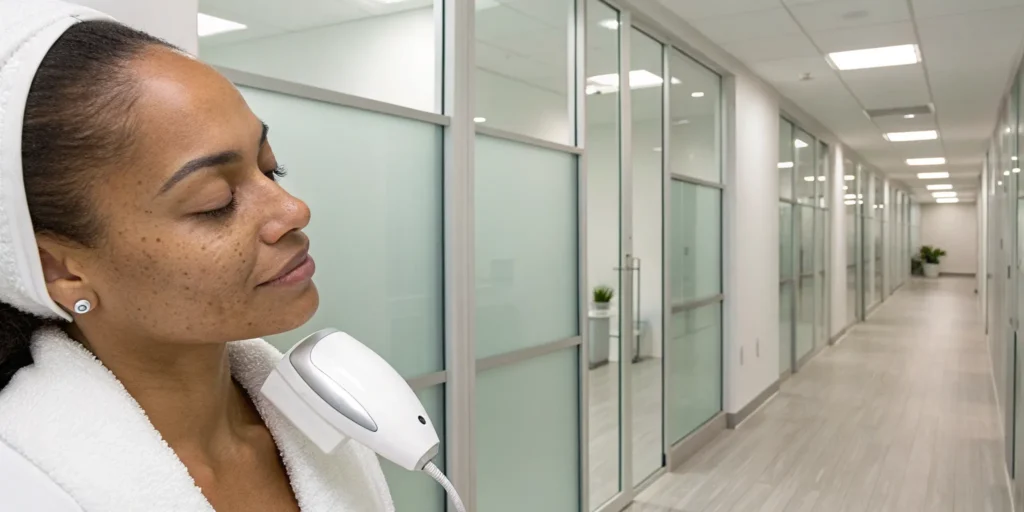
If you’ve tried every cream and serum for acne scars, you know how frustrating it is when nothing seems to touch the texture of your skin. That’s because true scars are a structural issue, not just a surface-level problem. This is where professional treatments come in. The world of acne scars and laser therapy offers a powerful solution, capable of remodeling the skin from the inside out for a smoother, more even appearance. This guide will walk you through the different types of scars and the advanced treatments, like our Sylfirm X RF Microneedling, that can finally deliver the results you’ve been looking for.
Key Takeaways
- Know Your Scars: Effective treatment begins with correctly identifying your scar type, whether it’s ice pick, rolling, or boxcar. A professional consultation is the only way to get a precise diagnosis and create a treatment plan that will actually work for you.
- Your Treatment Plan is Unique: There is no single “best” laser for acne scars. The right strategy is customized for you, considering your scar type, skin tone, and goals, and may involve a mix of different laser technologies for the most complete results.
- Commit to the Full Process: Your results depend heavily on what you do before and after your appointment. Following pre-treatment rules and sticking to your aftercare routine, especially with sun protection, is non-negotiable for safe healing and achieving the best possible outcome.
Understanding Acne Scars: What Are They and Why Are They So Stubborn?
If you’ve ever dealt with a breakout, you know the frustration doesn’t always end when the pimple disappears. Sometimes, it leaves behind a permanent reminder in the form of a scar. Acne scars form when a breakout penetrates the skin deeply and damages the tissues beneath it. As your skin attempts to repair this damage, it produces collagen. If it produces too little collagen, you get a depressed scar. If it produces too much, you get a raised scar.
These textural changes are what make acne scars so stubborn. Unlike the temporary red or brown spots (called post-inflammatory hyperpigmentation) that fade over time, true scars involve a structural change in your skin. This is why topical creams often fall short and why professional face and skin treatments are usually needed to see real improvement. Understanding the specific type of scar you have is the first step toward finding the most effective solution.
Ice Pick Scars
Ice pick scars are exactly what they sound like: small, deep, narrow pits that look as if the skin has been punctured with a tiny, sharp tool. They often result from severe, cystic acne that damages the skin’s deeper structures. Because of their depth, ice pick scars are notoriously difficult to treat with surface-level products.
To effectively address them, a treatment needs to reach deep into the dermis to stimulate new, healthy collagen from the bottom up. Think of it as rebuilding the skin’s foundation to fill in the pit. Treatments like Sylfirm X RF Microneedling are designed to do just that, delivering energy deep within the skin to kickstart that crucial healing and remodeling process.
Rolling Scars
Rolling scars give the skin a wavy, uneven, or “rolling” appearance. They don’t have the sharp, defined edges of other scar types. Instead, they are wide and shallow, caused by bands of scar tissue that form under the skin. These bands pull the epidermis down, tethering it to the deeper structures and creating that undulating texture on the surface.
Because the issue lies beneath the surface, effective treatment involves breaking up those fibrous bands and encouraging the skin to produce new collagen to create a smoother plane. A comprehensive treatment plan is key, as addressing both the tethering and the surface texture will give you the best results. Our team can help you find the right combination of laser treatments to restore a more even complexion.
Boxcar Scars
Boxcar scars are round or oval-shaped depressions with steep, well-defined vertical edges, similar to chickenpox scars. They can be shallow or deep and are caused by widespread collagen loss from inflammatory acne. When the inflammation destroys tissue, it leaves a void, and the skin above sinks in, creating that crater-like appearance.
Unlike rolling scars, boxcar scars don’t have a wavy texture but are distinct, individual indents. They tend to respond well to treatments that focus on rebuilding collagen to “fill in” the depression from the inside out. Depending on their depth, a series of treatments may be needed to gradually lift the base of the scar until it’s level with the surrounding skin.
Raised Scars and Discoloration
While most acne scars are atrophic (depressed), some people develop hypertrophic, or raised, scars. This happens when the body goes into overdrive during the healing process and produces too much collagen, creating a firm, raised lesion that stays within the boundaries of the original pimple. These are more common on the chest and back but can appear on the face.
It’s also important to distinguish true scars from discoloration. Post-inflammatory hyperpigmentation (PIH) leaves brown spots, while post-inflammatory erythema (PIE) leaves red or purple spots. These are not true scars because the skin’s texture isn’t changed, but they are a common concern. A professional consultation with our team is the best way to correctly identify what you’re dealing with and create a plan that addresses both texture and tone.
Finding the Right Laser Treatment for Your Scars
Once you know what kind of scars you’re working with, you can start exploring the right treatment to address them. Laser technology has come a long way, and there are a few different paths you can take depending on your scar severity, skin goals, and how much social downtime you’re comfortable with. Think of it less as a one-size-fits-all solution and more as a personalized plan we can create just for you.
The main categories you’ll hear about are ablative and non-ablative lasers. Each works differently to resurface the skin and encourage new, healthy cell growth. Let’s break down what that means for you.
Ablative Lasers: Deeper Correction, More Downtime
Ablative lasers are the heavy hitters of the laser world. They are incredibly effective for more significant scarring, like deep boxcar or rolling scars, because they work by carefully removing the thin, outer layers of damaged skin. This process triggers a powerful healing response in your body, leading to a major increase in collagen production and smoother, renewed skin.
Because this treatment is more intensive, you should plan for a longer recovery. The downtime for ablative lasers can range from one to three weeks as your new skin reveals itself. While it requires more patience, the trade-off is often a dramatic and lasting improvement in your skin’s texture.
Non-Ablative Lasers: Gentler Approach, Less Downtime
If you have milder scarring or simply can’t press pause on your life for a long recovery, a non-ablative laser might be the perfect fit. Instead of removing skin layers, these lasers work by gently heating the tissue beneath the surface. This stimulates collagen growth from the inside out without disrupting the top layer of your skin, resulting in a much shorter recovery period, typically just a few days.
While one session won’t produce the same level of change as an ablative laser, a series of treatments can create beautiful, gradual improvements in skin tone and texture. Our advanced laser treatments are designed to refresh your skin with minimal interruption to your daily routine.
Combination Treatments: The Best of Both Worlds
Sometimes, the most effective plan doesn’t involve choosing one laser over the other. A combination approach allows us to create a truly customized treatment for your unique skin. For instance, we might use an ablative laser to target a few deeper scars and then use a gentler method to improve the overall texture and tone of the surrounding skin.
Pairing lasers with other treatments, like Sylfirm X RF Microneedling, can also create incredible, comprehensive results. This strategy lets us address different types of scarring and skin concerns all at once, giving you the best possible outcome with a plan tailored specifically to your goals.
Is Laser Treatment Right for You?
Laser treatments can be a game-changer for acne scars, but they aren’t a universal solution. The key to incredible results is making sure you’re the right candidate and that the treatment is tailored specifically to you. Your skin type, the kind of scars you have, and even the timing of your treatment all play a significant role in the outcome. Think of it as a partnership between you and your provider; the best results happen when we work together.
Before you book an appointment, it’s important to understand what makes someone a good fit for laser therapy. A professional consultation is the only way to know for sure, but learning about the factors we consider will help you go into that conversation feeling prepared and confident. Let’s walk through the most important considerations to determine if laser treatment is the right next step for your skin journey.
How Skin Type and Tone Play a Role
Your unique skin is the starting point for any treatment plan. Lasers work by sending a concentrated beam of light into the skin, which is absorbed by pigment. In the past, this created challenges for darker skin tones, which have more melanin. Thankfully, modern technology has come a long way. Advanced systems, like the BBL HEROic Laser, are designed to be safely and effectively used on a wider range of skin tones.
Beyond color, your skin’s overall condition is also a factor. If you have active acne breakouts, very sensitive skin, or other conditions like eczema or rosacea, we may need to address those first. A thorough evaluation with a skilled provider ensures the chosen laser is a perfect match for your skin’s specific needs, setting you up for success from the very beginning.
Which Scars Respond Best to Lasers?
Just as every person’s skin is different, so is every scar. The type of acne scar you have will largely determine which laser is the most effective. Deeper, narrower scars, like ice pick and boxcar scars, often require more intensive treatments that work by removing thin layers of skin to encourage fresh, smooth regrowth from below. This approach helps to level out the skin’s surface for a more even texture.
Shallower rolling scars or surface-level discoloration might respond beautifully to gentler, non-ablative lasers. These treatments heat the underlying tissue to stimulate collagen production without removing the top layer of skin, resulting in less downtime. In many cases, the best strategy involves a combination of treatments to address different types of scarring for the most comprehensive and satisfying results.
Why Timing Is Key: Active Acne vs. Old Scars
It can be tempting to jump straight to treating scars, but timing is everything. If you’re still experiencing active acne breakouts, our first priority will be to get that under control. Trying to use a laser on inflamed or infected skin can lead to more irritation and may even make breakouts worse. It’s like trying to paint a wall before you’ve patched the holes; you need a calm, stable surface to work with.
Once your acne is managed, we can create a plan to address the scars left behind. This might start with services like Medical Grade Facials to clear your pores and calm your skin. This creates the ideal canvas for future laser treatments, ensuring the laser can focus solely on correcting the scars.
Who Should Wait on Laser Treatments?
A good candidate for laser treatment is someone whose skin is ready for it and who can commit to the full process, especially aftercare. Sometimes, the best course of action is to wait. If you have a history of forming thick, raised scars (keloids), are pregnant or breastfeeding, or have taken certain medications like isotretinoin (Accutane) in the last six months, we will likely advise you to postpone laser therapy.
Our team at The Palm Medspa + Wellness prioritizes your safety and results above all else. Being a good candidate isn’t just about having scars; it’s about being at a point in your health and skin journey where the treatment can be truly successful. Following pre- and post-care instructions precisely is crucial for healing well and achieving that refreshed, clear skin you’re looking for.
What Kind of Results Can You Expect?
Thinking about laser treatments for acne scars is exciting, and it’s easy to picture perfectly smooth skin right away. While lasers can create incredible change, it’s helpful to go in with a clear picture of the process. The goal is significant improvement, not instant perfection. Your results will depend on a few key things, including the type of scars you have, the treatment you choose, and how your skin heals. Let’s walk through what you can realistically expect from your laser treatment journey.
Setting Realistic Goals: What Lasers Can (and Can’t) Do
Let’s be real: laser treatments are powerful, but they aren’t magic wands. The primary goal is to make scars look much less noticeable, not to erase them completely. Think of it as softening the edges and blending the texture so your skin appears smoother and more even. Research shows that certain treatments, particularly ablative lasers, can offer dramatic improvement by remodeling the skin’s surface. While a scar might not vanish entirely, its reduction can make a world of difference in how you feel about your skin. Setting this expectation from the start helps you appreciate the amazing progress you’ll see session after session.
How Many Sessions Will You Need?
One of the most common questions we get is, “How many treatments will it take?” The honest answer is: it depends. Lasting results rarely come from a single session. Most people need a series of treatments to achieve their desired outcome. The exact number is based on the severity of your scarring, your skin type, and the specific technology we use, whether it’s our Sylfirm X RF Microneedling or another laser therapy. During your consultation, we’ll create a plan tailored just for you, outlining the recommended number of sessions to get you the best possible results. It’s an investment in your skin that pays off over time.
Factors That Influence Your Final Results
Your final results are unique to you. Several factors come into play, including your scar type, skin tone, the specific laser chosen, and how well you follow your aftercare plan. Studies often report scar reduction in the 30% to 70% range, a result that leaves most people feeling very satisfied with their new, smoother skin. The most important factor is working with a provider who understands your goals and can develop a customized treatment plan for you. This partnership ensures the right technology is chosen for your specific needs, giving you the best chance at achieving the refreshed, confident look you deserve.
How to Prepare for Your Laser Treatment
Getting ready for your laser treatment is one of the most important steps in your journey to smoother skin. Think of it as setting the stage for amazing results. Proper preparation helps ensure your treatment is as effective and comfortable as possible, and it supports a smooth, speedy recovery. By following a few key guidelines before your appointment, you’re partnering with us to achieve the beautiful outcome you’re looking for.
We’ll go over everything in detail during your consultation, but here’s a general guide on what to expect and how you can get ready for your big day.
Your Pre-Treatment Checklist: What to Avoid
To ensure your skin is perfectly prepped for its laser session, you’ll need to press pause on a few things. For about 10 days before your appointment, it’s best to avoid medications and supplements that can thin your blood, like aspirin, ibuprofen, and vitamin E. This simple step helps minimize any potential bruising or bleeding.
If you smoke, we strongly recommend stopping for at least two weeks before and after your treatment. Smoking can slow down your body’s natural healing process, and we want your skin to recover as quickly and beautifully as possible. Following this checklist helps our advanced laser treatments work their magic effectively.
Adjusting Your Skincare and Sun Exposure
Your skin needs to be in a calm, healthy state before we begin. Sun exposure is the biggest thing to watch out for. Please avoid tanning and significant, unprotected sun exposure for at least four to six weeks prior to your treatment. Tanned skin is more sensitive and can react unpredictably to laser energy. Make broad-spectrum sunscreen your best friend; it’s essential for protecting your skin before and after your sessions.
You may also need to temporarily adjust your skincare routine. We’ll likely ask you to stop using products with strong active ingredients, like retinoids or certain acne medications, for a short period. This prevents irritation and ensures your skin is ready for a professional treatment like our Sylfirm X RF Microneedling.
What Happens During Your Consultation
Your consultation is where your personalized treatment plan begins. This is a conversation, not a lecture. It’s our chance to get to know you, your skin, and your goals. We’ll carefully examine your skin, discuss your acne scar concerns, and review your medical history. This helps us determine which laser is the perfect match for your specific skin type and tone.
We believe in making decisions together. We’ll explain your options, what you can realistically expect, and answer every single question you have. Our goal is for you to feel confident, informed, and excited about the path forward. This collaborative approach ensures the aesthetic services you receive are tailored just for you, setting you up for the best possible results.
Your Treatment Journey: During and After
Knowing what to expect can make your laser treatment experience feel much more comfortable. From the moment you step into the treatment room to the final days of your recovery, here’s a clear guide to your journey toward smoother skin.
Inside the Treatment Room: Process and Comfort
First, your practitioner will sit down with you to review your health history and talk through the entire process. This is the perfect time to ask any last-minute questions. Be sure to mention if you’re prone to cold sores, as the treatment can sometimes trigger them. Once you’re ready, a numbing cream is typically applied to the area to ensure you’re comfortable. The laser portion of the treatment itself is relatively quick, usually lasting between 15 and 45 minutes, depending on the size of the area being treated. Our team at The Palm is focused on making your experience with our advanced laser treatments as relaxing as possible.
The Healing Process: Downtime and Recovery
After your session, your skin will begin its natural healing process. Full healing can take anywhere from 10 to 21 days. For the first day or two, you can expect some swelling, and the treated area might feel itchy or sting a bit for up to three days. This is all a normal part of the recovery. Some people experience temporary redness or even mild bleeding, but these symptoms usually resolve within a few days. Think of this downtime as your skin’s opportunity to rebuild itself from the inside out, revealing a smoother, more refreshed surface.
Essential Aftercare for Optimal Healing
Proper aftercare is crucial for getting the best results and ensuring a smooth recovery. Your practitioner will give you specific instructions, which you should follow carefully. This usually involves gently cleaning the treated area and applying an ointment like petroleum jelly several times a day to keep it moist and prevent scabs from forming. Sun protection is also non-negotiable. You’ll need to be diligent about applying sunscreen and should avoid direct sun exposure for six to eight weeks. Following a dedicated aftercare plan is a key part of our comprehensive approach to face and skin health.
Understanding the Potential Risks and Side Effects
Like any cosmetic procedure, laser treatments come with potential side effects, but most are mild and temporary. The most common ones are swelling, redness, and some initial discomfort. The pain typically subsides within a couple of hours, while redness can linger for up to 10 days. More serious risks like scarring, infection, or changes in skin color are rare, especially when your treatment is performed by a skilled professional. Choosing an experienced provider is the single most important step you can take to minimize risks. The expertise of our team is something we pride ourselves on, and we are here to support you every step of the way.
The Cost of Laser Treatment for Acne Scars
Let’s talk about one of the most practical questions on everyone’s mind: what is the investment for laser treatment? The truth is, there’s no one-size-fits-all price tag. The cost of laser treatment for acne scars is completely tailored to you, your skin, and your specific goals. Think of it less like buying a product off the shelf and more like commissioning a custom piece of art for your skin. The final price depends on several key things, including the type of laser technology used, the size of the area being treated, and the number of sessions needed to achieve your desired results.
While online sources might give you average costs, these numbers don’t account for your individual needs. A plan for minor, surface-level scars will look very different from a plan for deeper, more textured scarring. It’s an investment not just in a procedure, but in the expertise of your provider and a treatment plan designed to give you the best possible outcome. At The Palm Medspa, we focus on creating a comprehensive approach to your skin health, combining advanced treatments with a plan that makes sense for you. The best way to get a clear picture of the cost is through a personal consultation where we can assess your skin and map out all your service options.
What Factors Into the Price?
The final cost of your treatment plan depends on a few important details. First, the type of laser we use makes a difference. More intensive treatments often have a higher price per session than gentler options. The severity of your scarring and the size of the treatment area also play a big role. Treating a few minor scars will naturally cost less than addressing deeper, more widespread scarring across a larger area. Finally, most people require a series of sessions to see significant improvement, so the total number of treatments will be a major factor in the overall cost of laser treatment.
Laser Treatments at The Palm Medspa + Wellness
At The Palm Medspa + Wellness, we believe your treatment plan should be as unique as you are. During your consultation, we’ll sit down with you to discuss your goals and carefully examine your skin. This allows us to recommend the most effective treatment for your specific type of scarring and skin tone. We offer a range of advanced laser therapies, including the BBL HEROic laser and Sylfirm X RF Microneedling, ensuring we can find the perfect fit. Your final price will be based on this personalized plan, giving you a clear and accurate understanding of the investment required to help you feel refreshed and confident in your skin.
Frequently Asked Questions
How do I know if I have true acne scars or just discoloration? This is a great question because the two are often confused. The easiest way to tell is by looking at the texture. True acne scars involve a change in your skin’s surface, creating either a depression (like a pit or wave) or a raised mark. Discoloration, on the other hand, leaves a flat red, purple, or brown spot behind. While discoloration can fade over time, textural scars require professional treatment to improve. A consultation is the best way to get a definite answer and find the right solution.
Will the laser treatment be painful? We know this is a big concern for many people, and your comfort is our top priority. Before the treatment begins, we apply a strong topical numbing cream to the area to minimize any sensation. During the procedure, most people describe the feeling as a quick, warm snap against the skin. Any discomfort is very brief, and our team will be with you the entire time to make sure you feel as relaxed as possible.
How long will it take to see the final results from my laser treatments? Patience is a key part of the process. While you may notice some improvements after your skin heals from the first session, the most significant changes happen over time. Laser treatments work by stimulating your body to create new collagen, which is a gradual process. Most people need a series of sessions, and the final, beautiful results are typically visible a few months after your last treatment is complete.
Can I get laser treatments if I have a darker skin tone? Yes, absolutely. While older laser technologies posed risks for skin with more melanin, modern advancements have made treatments much safer and more effective for a wide range of skin tones. We use advanced systems that can be precisely adjusted for your specific skin type. This is why a thorough consultation is so important, as it allows us to choose the perfect technology to give you amazing results without compromising the health of your skin.
Why do I need a consultation? Can’t I just book the treatment I want? Think of your consultation as the first and most important step in your treatment plan. There are many different types of acne scars and several kinds of laser technologies, and what works for one person may not be right for another. During our conversation, we assess your specific scars, skin type, and goals to create a personalized and effective plan. This ensures your safety and gives you the very best chance at achieving the smooth, refreshed skin you’re looking for.