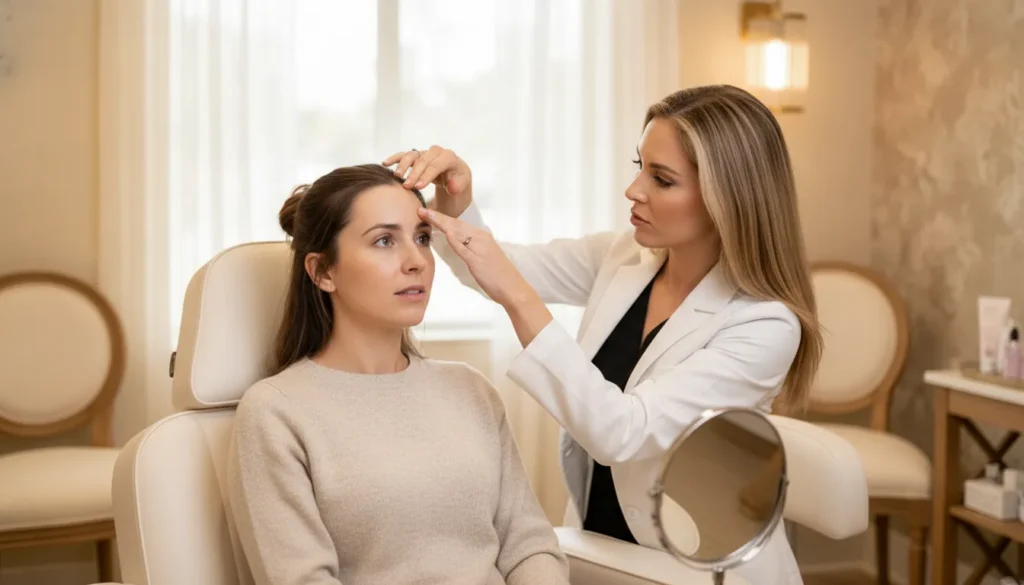
What you do after a neurotoxin appointment can be simple. The first day still deserves thoughtful care. Botox works by blocking nerve signals that cause muscles to contract. This can soften expression-related lines over time (Mayo Clinic). For broader context before treatment, read Injectable Treatments: What to Expect, Costs, and Real Results. Aftercare can vary by product, treatment area, and your plan. Your treating provider’s instructions should always come first.
The most important botox aftercare instructions are to remain upright for the recommended period. Avoid rubbing or massaging treated areas, and postpone strenuous exercise until your provider says it is appropriate. Mild redness, tenderness, swelling, or bruising can occur. Results may develop gradually rather than appearing immediately.
Knowing what is reasonable in the first few hours can make recovery feel more straightforward. Start with the practical steps that help protect treated areas. Then use this guide to plan exercise, manage expected changes, and know when to check in with your provider.
Ready to understand your personalized aftercare plan? Book a no-cost consultation with The Palm Medspa + Wellness or contact our team.
Following Botox Aftercare Instructions During the First 4 Hours
The first few hours give injection sites time to settle. They are also a chance to avoid unnecessary pressure. Follow your treating provider’s instructions first. Guidance can vary by treatment area, product, and plan. For broader context, review injectable treatments at The Palm Medspa + Wellness.
For most patients, the goal is simple: stay comfortable, keep your hands off treated areas, and continue calm activities. Botox blocks chemical signals from nerves that cause muscles to contract. It does not require you to hold your face still or avoid every facial movement. Mayo Clinic explains how Botox affects muscle contraction.
| Aftercare window | General focus | Check with your provider about |
|---|---|---|
| First 4 hours | Stay upright and avoid pressure or rubbing. | Any product or area-specific timing. |
| First 24 hours | Skip strenuous exercise, heat, alcohol, and massage. | Medication and activity questions. |
| Up to 2 weeks | Allow results to develop before judging them. | Follow-up or adjustment timing. |
Your first-four-hours checklist
- Remain upright. Cleveland Clinic guidance recommends waiting at least four hours before lying down. Sit, stand, or walk gently rather than reclining flat. If your provider gives a different timeframe, use those instructions.
- Keep pressure away. Do not rub, massage, press, or repeatedly check injection sites. Avoid resting your face against your hands or anything else. General guidance recommends avoiding rubbing or massage for 24 hours.
- Let your face move normally. Gentle expressions such as smiling, frowning, and raising your eyebrows are generally acceptable. Do not force expressions or perform repetitive facial exercises.
- Cleanse gently. You can usually wash with lukewarm water and a mild cleanser. Use light pressure from clean hands, then pat dry. Skip scrubbing, exfoliating, cleansing brushes, and massage over treated areas.
- Keep the day low impact. Strenuous exercise is commonly postponed for 24 hours. Also avoid activities that create heat, pressure, or repeated touching until you review your provider’s instructions.
Mild tenderness, redness, or a small bruise can occur after an injection. If swelling is uncomfortable, a cool compress or towel-wrapped ice pack may help for no more than 10 minutes at a time. Apply it gently. Do not independently stop prescribed aspirin, blood thinners, or anti-inflammatory medication to prevent bruising. Ask the prescribing clinician or treating provider about medication questions.
After four hours, continue the complete aftercare plan. This may include restrictions for exercise, heat, alcohol, or skin treatments. Contact your injector about an unexpected symptom. Difficulty breathing, swallowing, or speaking requires immediate medical attention.
What to Avoid for 24 Hours After Neurotoxin Treatment
The first day after neurotoxin treatment is a good time to keep your routine gentle. Your provider’s instructions take priority. Guidance can vary by product, treatment area, and plan. Botox and Dysport are not interchangeable. Follow the specific recommendations from your appointment.
Keep your hands off treated areas
Avoid touching, rubbing, pressing, or massaging injection sites for at least 24 hours. This includes facial massage, vigorous cleansing, exfoliating scrubs, and cleansing brushes. You can generally wash with lukewarm water and mild cleanser. Use light pressure rather than friction. Normal expressions are usually fine. The goal is to avoid manipulating treated skin.
Pause strenuous exercise and excessive heat
Skip strenuous exercise for 24 hours. This includes intense gym sessions, running, hot yoga, and activities that substantially raise your heart rate. A relaxed walk may be appropriate for some people. Ask your provider if you are unsure what counts as strenuous.
Avoid saunas, steam rooms, hot tubs, very hot showers, and prolonged heat during the first day. Excessive heat may aggravate temporary redness or swelling. Postpone a facial, massage, peel, or other skin treatment until your provider says it is appropriate. Some guidance recommends waiting at least 48 hours for facials and massage, so confirm timing with your injector.
Limit alcohol and direct sun
General guidance recommends avoiding alcohol and direct sun for 24 hours after injections. Alcohol may increase bruising risk. Sun and heat can make temporary redness or swelling more noticeable. If you need to be outside, use practical sun protection and avoid intentional tanning.
Do not change prescribed medication on your own
Do not stop prescribed aspirin, blood thinners, or anti-inflammatory medicines just to reduce bruising. Changing medicine without medical direction can create greater risks than a temporary bruise. Ask the prescribing clinician whether any adjustment is safe. Your injector should know about medicines and supplements before treatment.
These conservative neurotoxin aftercare instructions are general education. They are not a diagnosis or personalized medical plan. Contact your provider if symptoms worsen or feel unusual. Seek immediate medical attention for difficulty breathing, swallowing, or speaking.
How Long Until You See Botox Results?
Neurotoxin results often appear gradually. The Palm lists a typical onset of about 3 to 7 days for Botox and other neurotoxin treatments. That range is an estimate, not a promise. Early changes may be subtle. Treated muscles may begin to relax before the full effect is visible. For the broader treatment decision, review Injectable Treatments: What to Expect, Costs, and Real Results before comparing your developing results.
Give the treatment time to develop. Botox effects can continue setting in for up to approximately 14 days. Some aftercare guidance notes that optimal results may not be visible until about two weeks. Judging the outcome too soon can create concern. It can also lead to requests for changes before the initial treatment reaches its intended effect.
Why the timeline can vary
Product, treatment area, treatment plan, and individual response can affect your result. Botox and Dysport should not be assumed to have identical onset, dosing, duration, or aftercare requirements. Follow the provider who treated you. Read more about neurotoxin treatment guidance.
The Palm describes typical neurotoxin results as lasting approximately 3 to 4 months. That is an estimate. Results may fade sooner or last longer. Base maintenance timing on your response and a provider discussion, not a fixed calendar date.
Want personalized guidance before or after your treatment? Book a no-cost consultation with The Palm Medspa + Wellness or contact our team.
When should you ask about adjustments?
Unless your provider says otherwise, wait for the treatment to develop before evaluating symmetry, movement, or dynamic wrinkles. A follow-up around two weeks may suit some plans. Timing is provider-specific. Contact your injector about worsening or unusual symptoms instead of interpreting them from online Botox aftercare instructions.
Can You Exercise After Botox?
Most conservative Botox aftercare instructions recommend waiting 24 hours before strenuous exercise. This includes activities that raise your heart rate, create heavy sweating, or involve intense exertion. Examples include running, high-intensity interval training, hot yoga, and demanding strength sessions. Cleveland Clinic also advises avoiding strenuous exercise for 24 hours. Learn more about this general guidance.
Your provider wants treated areas to remain undisturbed while the medication begins taking effect. Exercise can involve heat, sweat, pressure, and frequent face touching. These factors do not mean a workout will automatically cause a problem. Avoiding them during the initial period is a cautious plan.
What about light movement?
Advice about gentle activity is not identical for every patient. A relaxed walk may differ from a hard workout. Do not interpret light movement as a universal safety guarantee. Treatment area, product, injection technique, medical history, and provider protocol all matter. If your provider gives different instructions, those instructions control.
During the first day, avoid rubbing injection sites while wiping away sweat or adjusting headwear. Cleveland Clinic recommends avoiding rubbing or massage for 24 hours. Pause activity and contact your injector about discomfort, swelling, or unexpected changes.
How to plan your appointment around workouts
Schedule treatment after your last demanding workout. Alternatively, leave a full day before your next intense session. Tell your provider about a race, class, outdoor event, or travel. The Palm Medspa + Wellness team can explain what to expect from a personalized neurotoxin plan in Orlando.
What If You See Bruising or Uneven Results?
Small, light bruises are a common possible effect after Botox injections. Mild redness, swelling, tenderness, or headache can also occur. Bruising may happen when an injection reaches a small vein beneath the skin. It does not necessarily mean anything went wrong. A temporary change is not enough to diagnose a complication from a distance. Follow your provider’s instructions.
If swelling is uncomfortable, place a cool compress or towel-wrapped ice pack over the area for up to 10 minutes at a time. Keep pressure gentle. Do not rub, massage, or repeatedly press treated skin. A headache may occur shortly after injections. Any concerning symptom deserves a conversation with your provider. Do not stop prescribed medication on your own.
Uneven appearance can be difficult to interpret early. Neurotoxin effects develop gradually. The final result may not be apparent for up to two weeks. One side may change before the other. Swelling and bruising may temporarily change appearance. This does not confirm that an adjustment is needed. Contact your injector if appearance worsens, feels unusual, or differs from expectations.
When should symptoms be treated as urgent?
Difficulty breathing, swallowing, or speaking is an emergency symptom. Seek immediate medical attention, including calling 911. Do not wait for routine follow-up. Significant muscle weakness or signs of a serious allergic reaction also require prompt care. For non-emergency concerns, contact your treating provider. General neurotoxin aftercare guidance does not replace individualized medical advice.
When to Schedule Your Follow-Up Appointment
Neurotoxin results do not appear all at once. The Palm describes typical results beginning within 3 to 7 days. Other clinical guidance notes that effects can take up to 14 days to develop. A follow-up around two weeks may be useful, especially after a first treatment. It gives your provider time to assess the developing result.
Follow-up timing is not universal. Your provider may recommend a different schedule based on product, treatment area, treatment history, and your plan. A two- to three-week review is one approach described in aftercare guidance. It is not a requirement for every patient. Your treating practice’s instructions take priority.
Why waiting can be helpful
It can be tempting to request treatment as soon as you notice movement or uneven appearance. Do not rush into a touch-up before the development window passes. Early changes may settle. Adding treatment too soon can make response evaluation harder. Contact the practice that performed your injections if you have concerns.
Before follow-up, list your questions. Note when changes began, whether one area differs from another, and what result you hoped to achieve. Similar-lighting photos may help discussion. They cannot replace an in-person evaluation.
At The Palm Medspa + Wellness, licensed ARNPs provide injectable care. Learn more about injectable treatments and ask which follow-up timing fits your plan. If symptoms are severe or unexpected, seek appropriate medical care.
Have questions about your Botox aftercare instructions? Contact The Palm Medspa + Wellness or contact our team for a no-cost, no-obligation consultation.
Frequently Asked Questions
Can I lie down after Botox or Dysport?
Plan to remain upright for at least four hours after injections unless your provider gives different instructions. Gentle expressions are generally acceptable. Avoid rubbing, pressing, or massaging treated areas. Cleveland Clinic guidance recommends waiting at least four hours before lying down.
When can I exercise after a neurotoxin treatment?
Use a conservative 24-hour pause before strenuous exercise. Avoid substantial heat, sweating, or pressure during that window. Follow your injector’s advice if it differs. Light daily movement may be reasonable for some patients, but your plan and medical history should guide the decision.
How soon will I see my results?
Changes develop gradually. The Palm describes results appearing in about 3 to 7 days. Effects can take up to 14 days to develop. Review the outcome after that period. The neurotoxin service page provides the typical timeline.
When should I contact my provider about side effects?
Mild redness, tenderness, swelling, bruising, or headache can occur. Contact your provider about symptoms that worsen, seem unusual, or concern you. Seek immediate medical attention for difficulty breathing, swallowing, or speaking, as Cleveland Clinic advises.
Schedule Support for Your Neurotoxin Aftercare Questions
Personalized guidance can help you understand Botox or Dysport results and decide when follow-up makes sense. The Palm Medspa + Wellness can answer aftercare questions and discuss a plan that fits your goals. Contact our team for a no-cost, no-obligation consultation through our contact page.